
New Castle, Indiana
Flood Cleanup in New Castle
Water that came in from outside is a different job from a burst line. It arrives dirty, brings whatever it crossed on the way, and changes which materials can stay. Here is how flood cleanup and flood damage restoration work in New Castle homes and buildings.
Ground water is not clean water
Runoff that crossed a yard, a field, a gravel drive, or a barn lot carries soil, fertilizer, fuel residue, and whatever else was on the ground. Treat it as contaminated even when it looks clear. That single fact drives most of the decisions that follow: porous material that soaked it up generally leaves rather than dries, and surfaces that stay need cleaning as well as drying.
How the cleanup runs
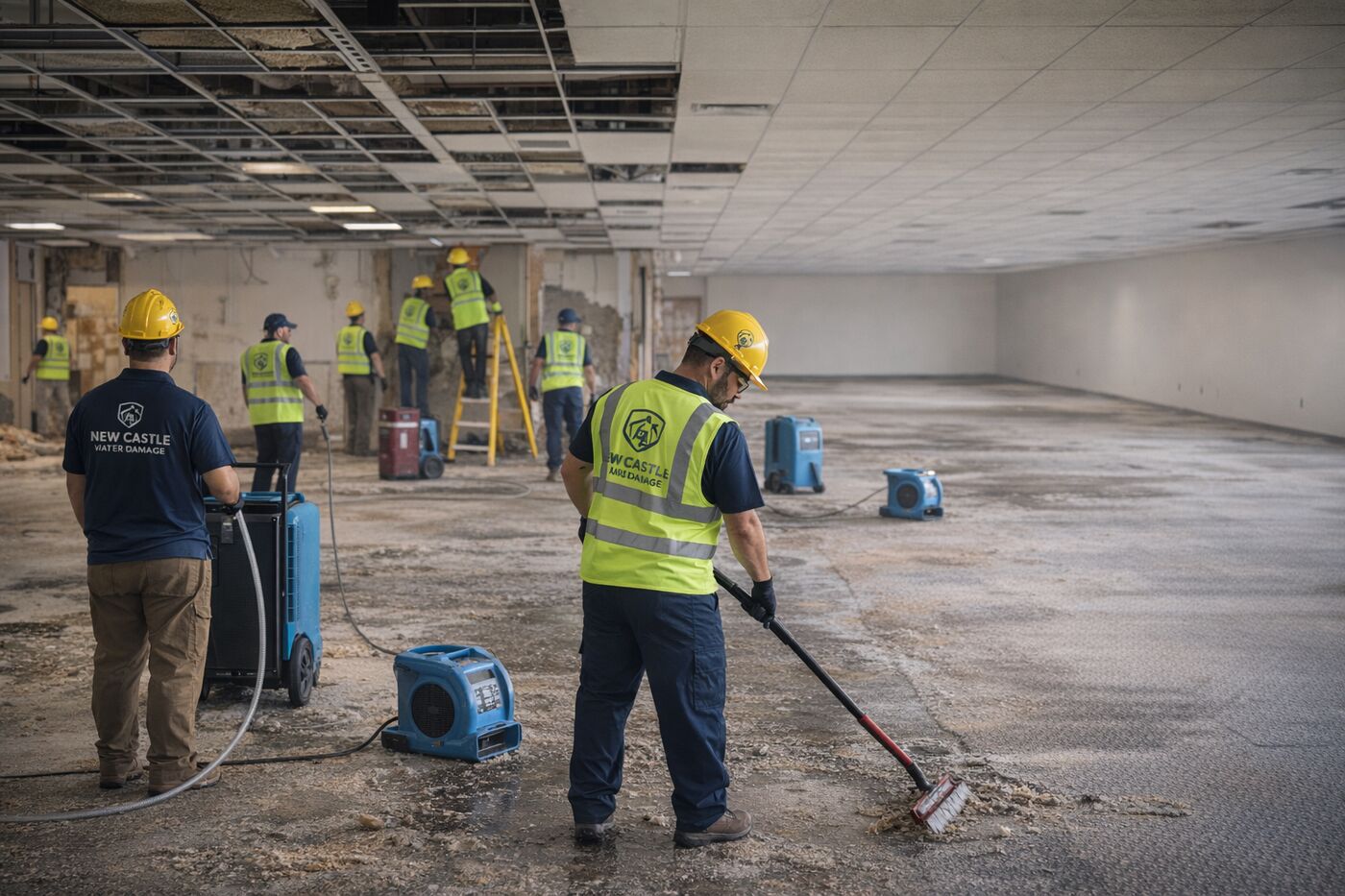
Bulk water and any mud or debris come out first. Then the sorting starts: carpet and pad, particle board, and saturated insulation usually go, while solid wood framing, masonry, and hard flooring are more often cleaned and dried in place. Surfaces that had contaminated water on them get cleaned before drying equipment goes in, because blowing air across a dirty surface just moves the problem around.
What tends to stay and what tends to go
- Carpet pad and carpet that sat in ground water: removed.
- Particle board, MDF trim, and cabinet bases that swelled: removed.
- Fiberglass and blown insulation that got wet: removed.
- Framing, subfloor, block, and concrete: cleaned, then dried and monitored.
- Stored belongings: sorted case by case, with anything porous and contaminated treated cautiously.
How flooding reaches buildings around New Castle
Short, heavy summer storms drop more water than saturated ground can take, and it runs downhill until something stops it. On rural parcels that often means a shop, barn, or garage on a low pad taking water across the slab. In town it is more often a doorway, a window well, or a foundation wall where the grade has settled toward the house over the years. Homes near the Blue River corridor sit on ground that stays wet longer after a heavy stretch.
If the water reached a below-grade room, our flooded basement cleanup page covers that. If it drained under the house instead, see standing water in a crawl space. Where a drain or septic system was involved, treat it as contaminated water from the start.
What to do before help arrives
- Stay out of moving or deep water, and keep clear of anything electrical that got wet.
- Do not run a shop vacuum or pump plugged into a circuit that serves the flooded area.
- Lift what you can reach safely from the floor, and photograph rooms before anything is moved.
Our approach
From standing flood water to a clean, dry building
Clear the water and debris
Bulk water, mud, and anything carried in are removed before assessment, so the actual condition of the floor is visible.
Sort and clean
Saturated porous material comes out, and the surfaces that remain are cleaned rather than simply dried over.
Dry and verify
Equipment runs until framing and subfloor readings hold at a normal level across repeat checks.
Flood water in a building?
Call 765-615-4599 and tell us what the water crossed before it got inside.
Flood cleanup questions
Is it safe to stay in the house after flood water gets in?
That depends on how much came in, whether electrical circuits were affected, and whether the water was contaminated. If power in the flooded area is off, the water was shallow, and sleeping areas stayed dry, people often stay. When the water is dirty or the panel got wet, staying elsewhere is the sensible choice. Describe the situation on the call and we will be straight with you.
Can I keep the carpet if it dries quickly?
With ground water, usually not. The pad underneath holds contaminated water against the floor, and carpet that has been soaked with outdoor runoff cannot be brought back to a sanitary condition in place. Hard flooring is a better prospect. We will tell you which items in your situation are worth trying to save.
What happens if the water sat for a day or more before anyone found it?
More material comes out, and drying takes longer, because water has moved into wall bases and the subfloor rather than sitting on the surface. It also raises the likelihood of odor and microbial growth. It is still workable; it just changes the scope. Tell us roughly how long it stood so we bring the right equipment.