
New Castle, Indiana
Crawl Space Flooding in New Castle
Water under the floor is a common problem in New Castle homes, and it is easy to miss. If you have standing water in a crawl space, or a musty smell and cold floors after a wet week, this page explains what to check.
What is actually happening under there
A crawl space is a closed box with a dirt or gravel floor, a plastic vapor barrier over it, and your house sitting on top. When ground water pushes in, the barrier that is supposed to keep soil moisture out of the house now holds a shallow pond in place. Air in that space does not exchange with the outdoors quickly, so the moisture goes upward into joists, subfloor, and insulation instead of evaporating away.
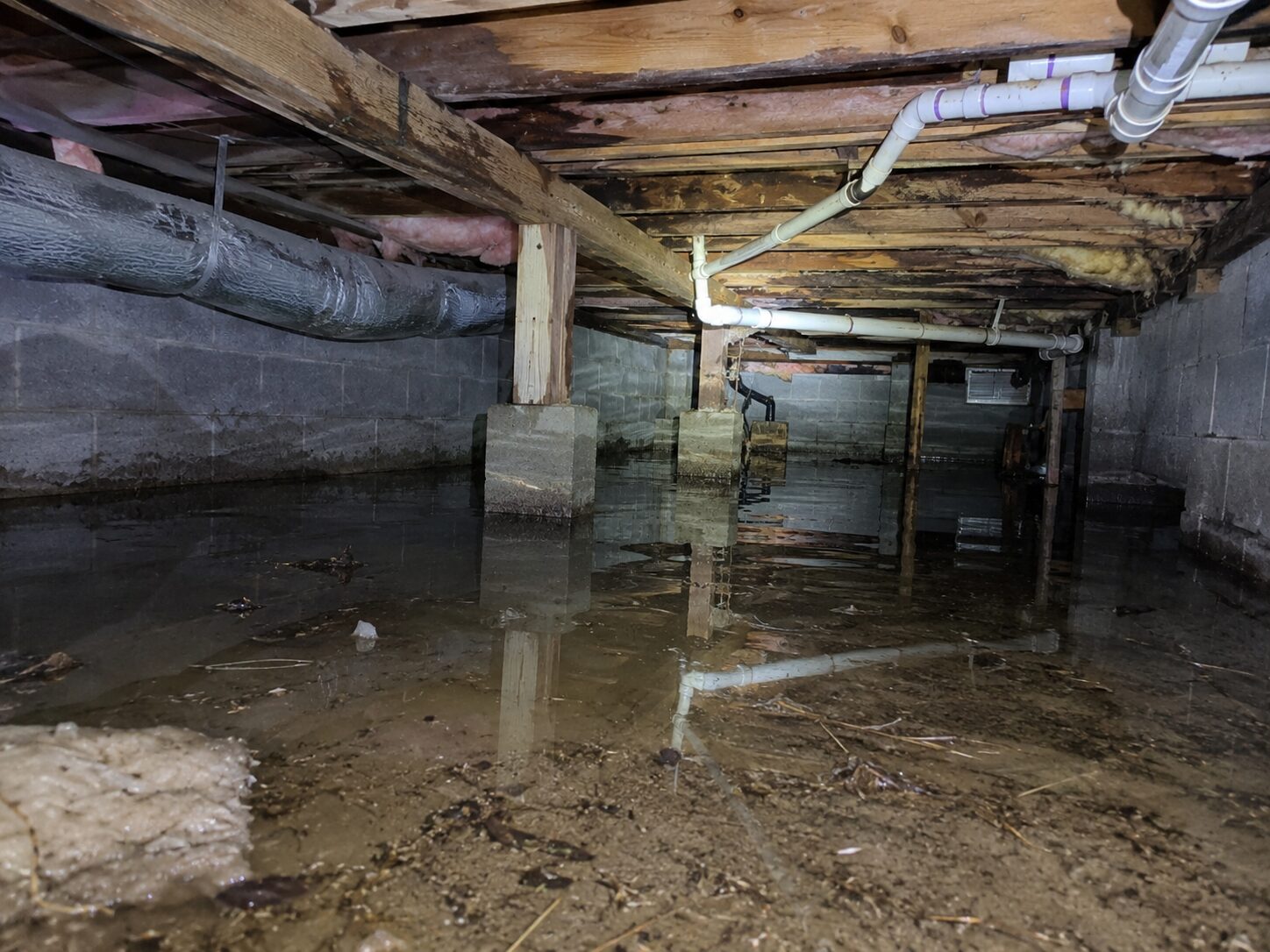
What crawl space water removal involves
Access comes first, because the hatch or vent opening decides what equipment can get in. From there the sequence is pumping the standing water out, pulling the material that has soaked through, and then drying the wood that the house actually rests on. Insulation between the joists is usually the first thing to go: once batts are wet they sag, hold water against the subfloor, and do not recover.
What we look at while we are under there
- Moisture readings in joists, rim board, and subfloor rather than just the surface.
- Whether the vapor barrier is trapping water above it or letting it seep from below.
- Ductwork and any insulation wrap that has taken on water.
- Piers, footings, and any sill wood that stays wet after the water is gone.
- Signs the water arrived from a plumbing line rather than the ground.
Why New Castle crawl spaces keep taking on water
Land around New Castle holds water. After a long soaking rain the ground stays saturated for days, and a crawl space sitting a foot or two below grade becomes the low point water finds. Gutters running short of the foundation, a grade that slopes back toward the house, and silted footing drains all make it worse. On rural parcels, field runoff can arrive from a direction that has nothing to do with your own yard.
Once water has been under a house through one wet season, the same spot tends to take it again. That is worth knowing before you replace anything above the floor: fixing the finished room without addressing the crawl space usually means doing the room twice. Water that also reached a finished lower level is covered on our flooded basement cleanup page.
What to do before help arrives
- Do not go into standing water in a crawl space if any wiring, junction box, or pump is submerged. Kill the circuit first if you can do it safely from the panel.
- Leave sagging wet insulation where it is; pulling it overhead in a confined space drops debris and water into your face.
- If the water smells of sewage or the property is on septic, treat it as contaminated and stay out. That situation is covered on our sewage backup cleanup page.
Our approach
Clearing and drying a flooded crawl space
Open and assess
We check access, electrical safety, and where the water entered before any equipment goes under the house.
Pump and strip
Standing water comes out, then wet insulation and unsalvageable barrier material are bagged and removed rather than left to drain.
Dry and re-read
Dehumidification runs in the enclosed space with readings taken in the framing until the numbers hold steady, not just until it looks dry.
Water under the house?
The longer it sits against the framing, the more of the floor structure comes into the job.
Crawl space questions we hear
How do I know there is water under there if I cannot get in?
The usual signs are a musty smell that gets stronger near floor vents, floors that feel cold or springy in one area, and doors that stick after a wet stretch. A flashlight through a foundation vent often shows a reflection off standing water. If any of that matches, call rather than crawling in: access and electrical safety are the first two things to sort out.
Should the vapor barrier be replaced or just dried?
If water is sitting on top of it and it has been there for days, the material underneath is usually wet too, so it comes out and gets replaced. A barrier that took a brief splash and dried quickly can sometimes stay. We decide based on readings under the plastic, not just the surface, and tell you which case yours is.
How long does drying take under a house?
Often longer than a room upstairs, because the space is enclosed and the ground keeps feeding moisture in. Several days is common, and heavier framing can take longer. We monitor rather than guess, and adjust equipment while the readings come down. We will tell you what we are seeing at each check instead of naming a finish date at the start.