
New Castle, Indiana
Burst Pipe Cleanup in New Castle
A split supply line puts out clean water under pressure, continuously, until somebody closes a valve. That is why a pipe failure in an empty building often does more damage than a storm does to an occupied one.
Shut the water off first
Before anything else, close the main shutoff. In town it is usually where the line enters the house, often near the water heater or on the wall facing the street. On a well system it is at the pressure tank, and killing power to the pump stops it refilling the line. If the valve sits in the area that is now flooded, leave it and say so when you call: that changes what we do on arrival.
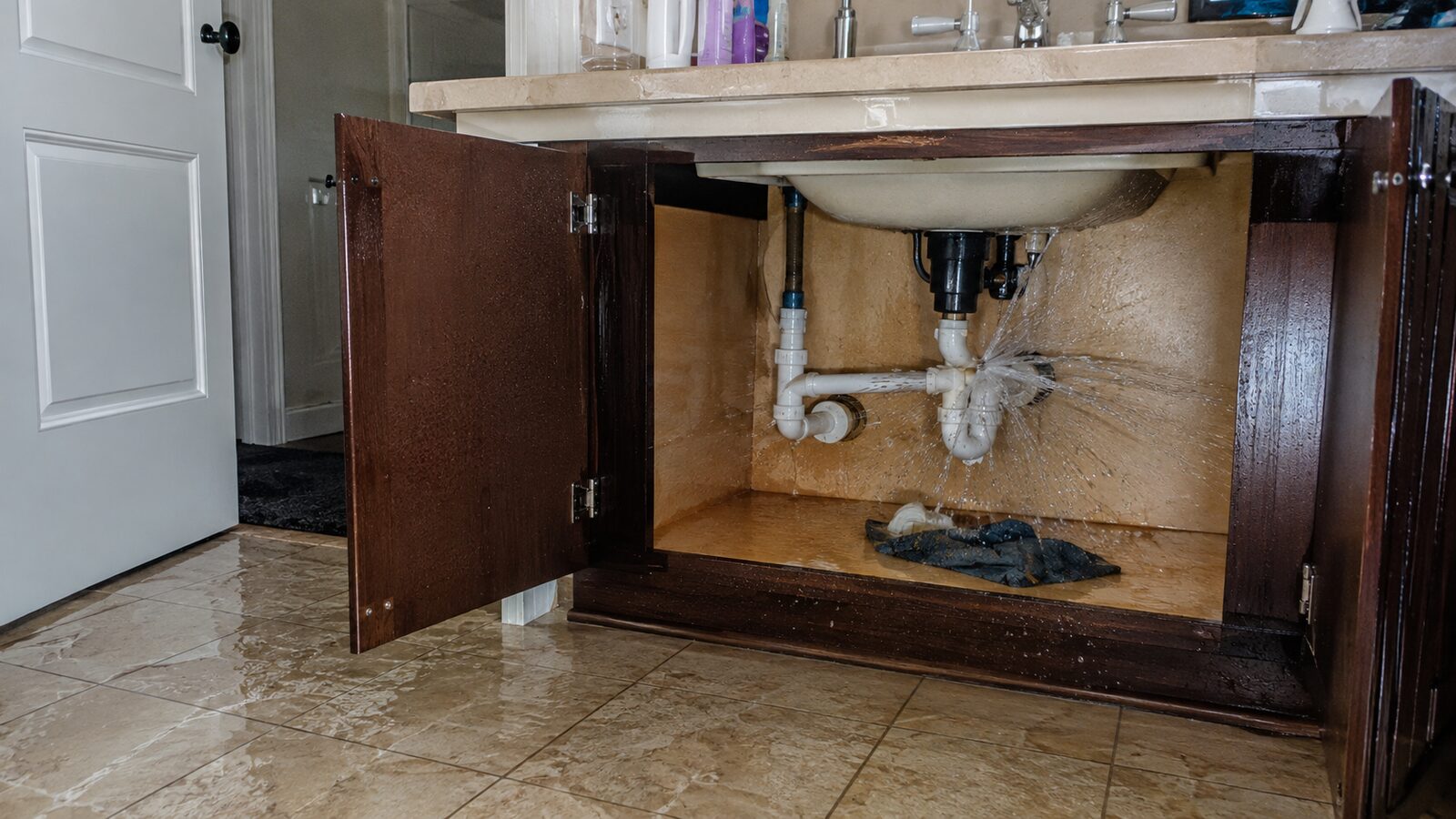
Where the water actually went
Pressurized water sprays rather than pools, so it reaches places gravity never would: the back of a cabinet, the underside of a floor above, the inside face of an exterior wall. The visible puddle is usually the smallest part of the problem. We trace it with readings through wall cavities and along the joist run, because a pipe that let go in a ceiling can wet a wall two rooms away before anything shows on a surface.
Common failure points in local homes and outbuildings
- Lines running through an unheated or partly heated crawl space.
- Pipe in an exterior wall on the north or west side of a building.
- Hose bibs and lines to an unheated shop, barn, or garage.
- Supply lines in a house left at a low thermostat setting while empty.
- Older galvanized runs that fail at a threaded joint rather than mid-span.
Freeze risk around New Castle
The pattern here is not steady cold; it is the swing. A hard overnight freeze after a mild week catches lines that were never insulated, especially in buildings that are only heated when someone is using them. Properties checked weekly rather than daily are where we see the largest volumes, because the water ran unattended for days rather than minutes.
Once the source is closed off, the work becomes getting the standing water out, then the drying and mitigation process. If the line was under the floor, the crawl space itself will need attention: see water under the house.
What to do before help arrives
- Close the main shutoff, or kill power to the well pump if you are on a well.
- Turn off power to affected circuits at the panel if water reached outlets, lights, or an appliance.
- Open a low faucet to drain pressure from the line, and leave the failed section untouched for whoever repairs it.
Our approach
After a line lets go
Stop and assess
We confirm the supply is isolated and check electrical safety before working in the affected rooms.
Trace the spray path
Readings follow the water into wall cavities, cabinet backs, and the floor structure rather than stopping at the visible puddle.
Dry the cavities
Enclosed spaces are opened or dried through controlled airflow, then checked until the framing readings hold.
Pipe let go?
Get the valve closed, then call 765-615-4599 and tell us how long it was running.
Burst pipe questions
Do you fix the pipe as well?
The plumbing repair itself is a plumber's job, and on most calls that happens alongside our work rather than instead of it. What we handle is the water: removing it, finding where it traveled, and drying the structure. Getting both moving at once is usually the fastest route, so call whichever of us you reach first and mention the other.
It was clean water from a supply line. Do I still need drying?
Clean water simplifies what can be saved, but it wets materials exactly the same way. Water inside a wall cavity or under flooring does not evaporate on its own quickly enough to prevent swelling, delamination, and eventually odor. Readings tell you whether drying is needed; guessing from the surface usually understates it.
How do you find water inside walls without tearing them apart?
Meters read moisture through the surface, and where readings are high we can often dry the cavity through small, deliberate openings rather than removing whole sections. Some material does have to come out when it is saturated. The point of measuring first is keeping that removal to what is genuinely wet.